


Maude Davidson
One of Bentonville’s earliest champions of early childhood education was Maude Davidson (1910-1992), who operated a private kindergarten in town for nearly three decades. At a time when kindergarten was not yet widely available in public schools, private programs like Davidson’s played an important role in small towns across Arkansas.
Davidson began her school in 1946 with just five children, teaching in the den of her home. As the program grew, the Davidsons eventually built a small school building, complete with handmade desks and a yard shaded by maple trees where children played.
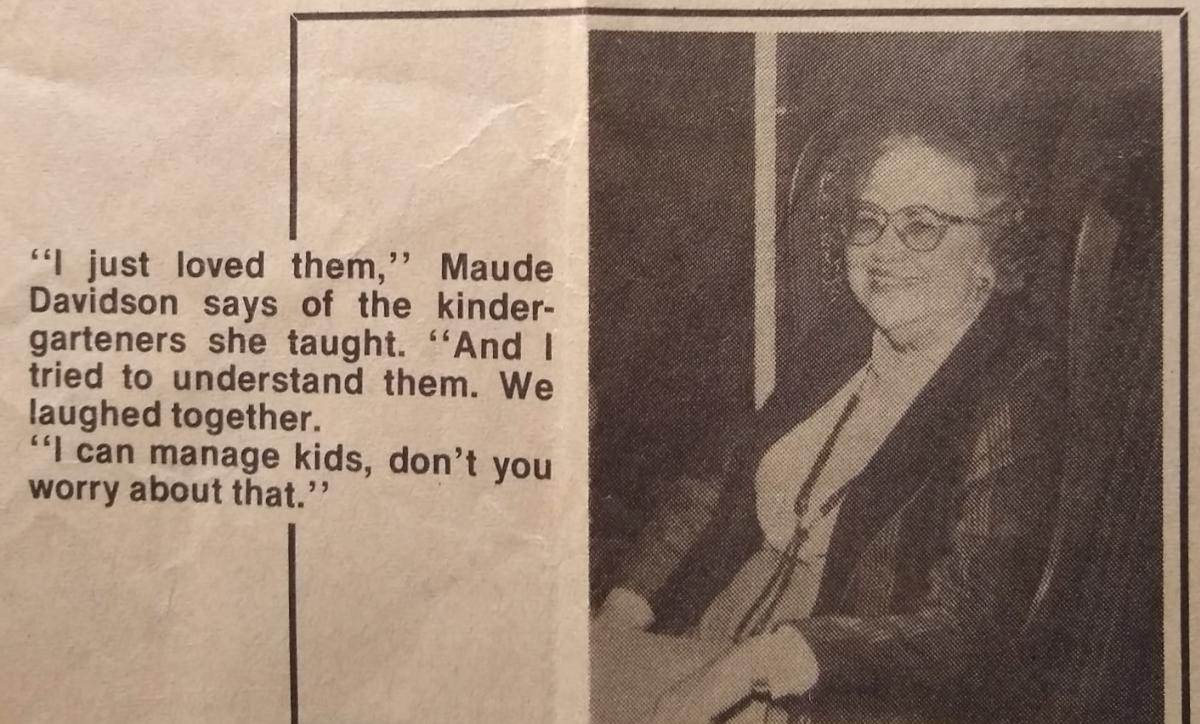
Davidson taught phonics, printing, and numbers, but she also believed deeply in imagination and storytelling. She often encouraged her students to dramatize stories and act them out, turning lessons into playful experiences. Her classes even rode in Bentonville’s annual fair parade, once on a float built around a giant teapot, with children blowing bubbles in a theme called “Bubblin’ Over With Energy.”
The year Davidson retired from teaching, kindergarten became part of the local public schools. When her final kindergarten class graduated from Bentonville High School in 1985, they presented her with a plaque honoring “the person who started us on the right foot.”
Reflecting on her years of teaching, Davidson said simply:
“I just loved them. And I tried to understand them. We laughed together.”
Lula Agnes Williams
For decades, the Bentonville Post Office on the Square served as one of the town’s most important connections to the outside world. Letters, newspapers, and packages all passed through its doors, making the post office a daily gathering place for the community.
Among those who guided this vital institution were Esmond L. Williams and his wife, Lula Agnes Williams (1904-2006). In 1940, Esmond was appointed Postmaster of Bentonville by President Franklin D. Roosevelt. Before taking on the role, Esmond and Agnes had served the county as managers of the Benton County Poor Farm. Years later, Agnes stepped into leadership herself. In 1961 she was appointed Acting Postmaster of Bentonville, continuing the Williams family’s long tradition of public service.
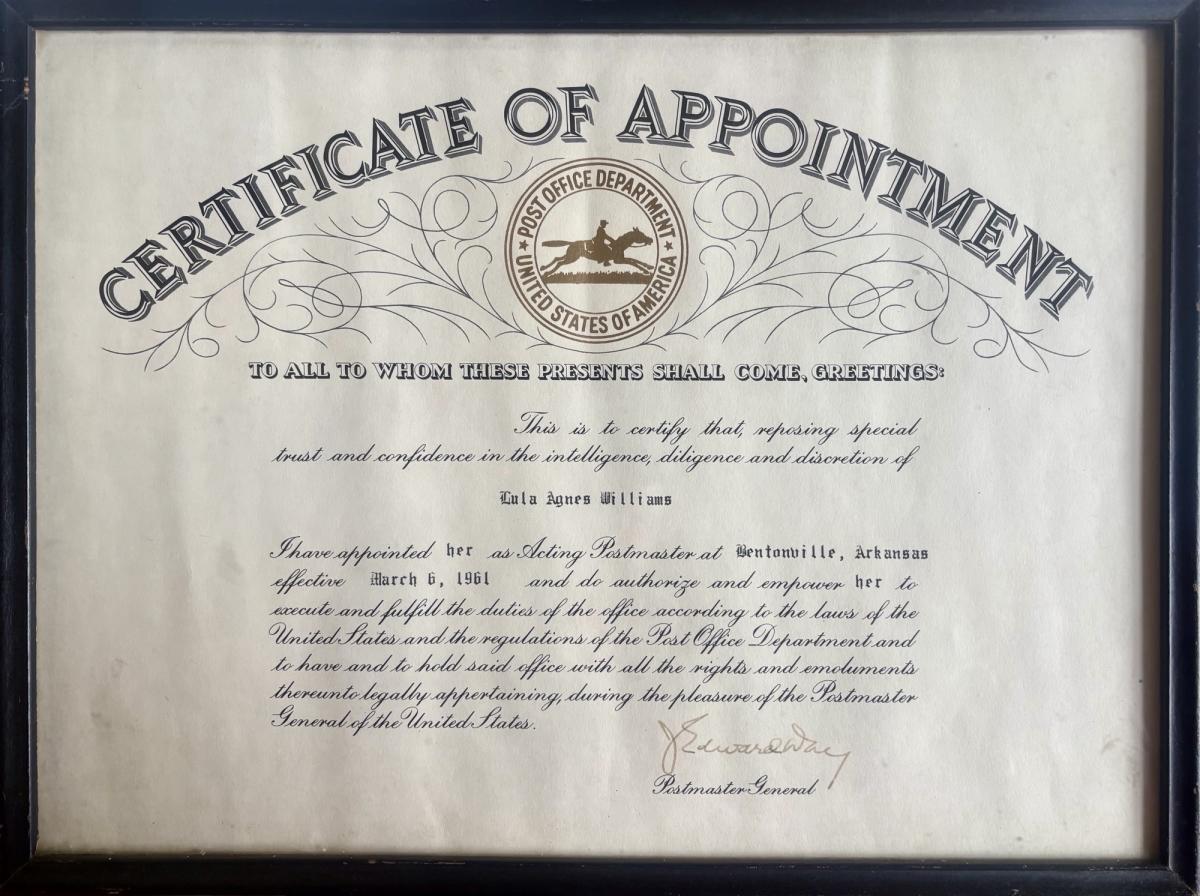
Williams was also an educator, teaching elementary school (primarily fifth grade) for about a decade. Born at a time when log cabins were still the traditional homes in Benton County, she grew up in a large family and remained closely connected to the community throughout her life. In addition to her public service, she was active in organizations such as the Business and Professional Women’s Association and the Arkansas Association of University Women. Later in life she authored a historical novel, Hills Are for Climbing, published in 1986.
Through both federal service and community life, Agnes Williams remained a steady and respected presence in Bentonville for many decades.
Belle Overstreet
For generations of Bentonville residents, Overstreet Jewelry was a familiar stop on the north side of the Bentonville Square. The store operated for nearly a century and became part of the rhythm of downtown life.
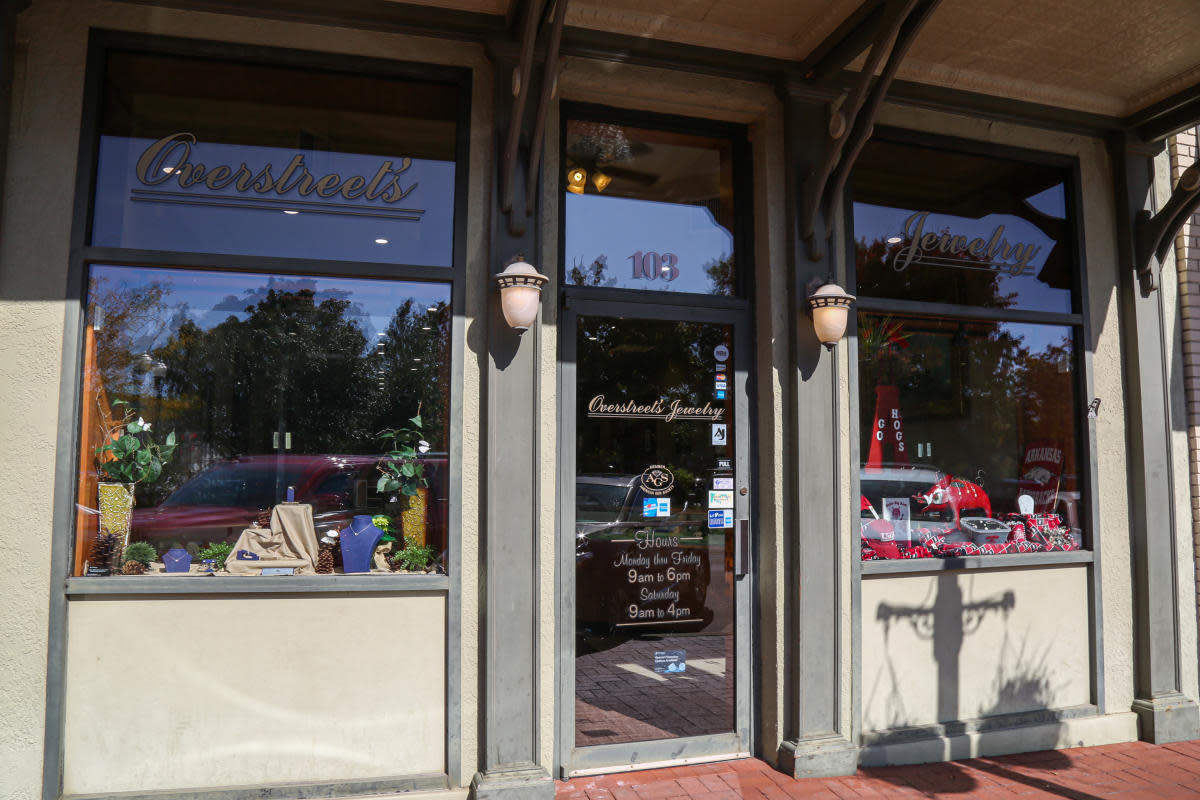
Behind the business was Belle Overstreet (1918-2008), who managed the store while her husband Ralph focused on watch repair and technical work. Together, they built a business that served Bentonville families through weddings, graduations, anniversaries, and everyday moments.
Belle was known for running the shop with confidence and discipline. Local memories remember her as a strong presence in the store and in the community, someone who brought a sense of professionalism and respect from even the youngest of customers.
Beyond the jewelry store, Belle also helped organize Bentonville’s Professional Women’s Club, creating space for women in business and civic life to connect and support one another at a time when few formal networks existed.
Through both commerce and community leadership, Belle Overstreet left a lasting legacy on the culture of Bentonville.
Mary Baggett
Mary Baggett (1931-2025) devoted much of her life to public service in Bentonville, helping shape the community through both civic leadership and volunteer work.

Born in Bentonville in 1931, Baggett graduated from Bentonville High School in 1949 and went on to work in several local institutions, including the Bank of Bentonville and later the City of Bentonville, where she served as assistant to the mayor. She concluded her professional career at Bates Medical Center, retiring in 1995.
Baggett helped break new ground for women in local government. In 1972 she became the first woman elected to the Bentonville City Council. She later served on the Benton County Quorum Court beginning in 1984 and was also the first woman appointed to the Bentonville Planning Commission.
Beyond elected office, Baggett played a major role in Bentonville’s civic life. She helped lead organizations such as the Bates Hospital Auxiliary, the Northwest Arkansas Soroptimist Club, and the Bentonville Kiwanis Club, where she became the first female president. She also supported many local cultural institutions, including the Peel Mansion and the Bentonville Public Library. She briefly served on the Bentonville History Museum board, reflecting her deep interest in local history and preservation.
Baggett passed away in 2025 at the age of 94. Today, places such as Austin-Baggett Park and the Mary Baggett Reading Room at the Bentonville Public Library reflect her lasting impact on the community.
Bentonville’s Women Mayors
Though women had long shaped Bentonville’s schools, businesses, and civic institutions, it was not until the mid-20th century that women began stepping into the city’s highest office.
Juanita Wyman briefly served as Acting Mayor of Bentonville from April 25 to May 23, 1950, following the death of Mayor J.C. Knott, who passed away in office on April 23, 1950. Though her time in the role was short, Wyman’s service marked the first time a woman stepped into Bentonville’s mayoral leadership.
Decades later, Terry Black Coberly became Bentonville’s first elected female mayor, serving from 1995 to 2006 during a period when the city was beginning to experience rapid growth and transformation. Coberly came from a family deeply rooted in Benton County public service; both her father and uncle served as county sheriffs, and she spent part of her childhood living with her family in the Benton County Jail, where the sheriff’s family lived at the time.
Today, Stephanie Orman, elected mayor in 2018, continues that legacy of leadership. During her administration, Bentonville has seen significant growth while expanding investments in parks, trails, infrastructure, and community development, helping guide the city through a period of national attention and rapid change.
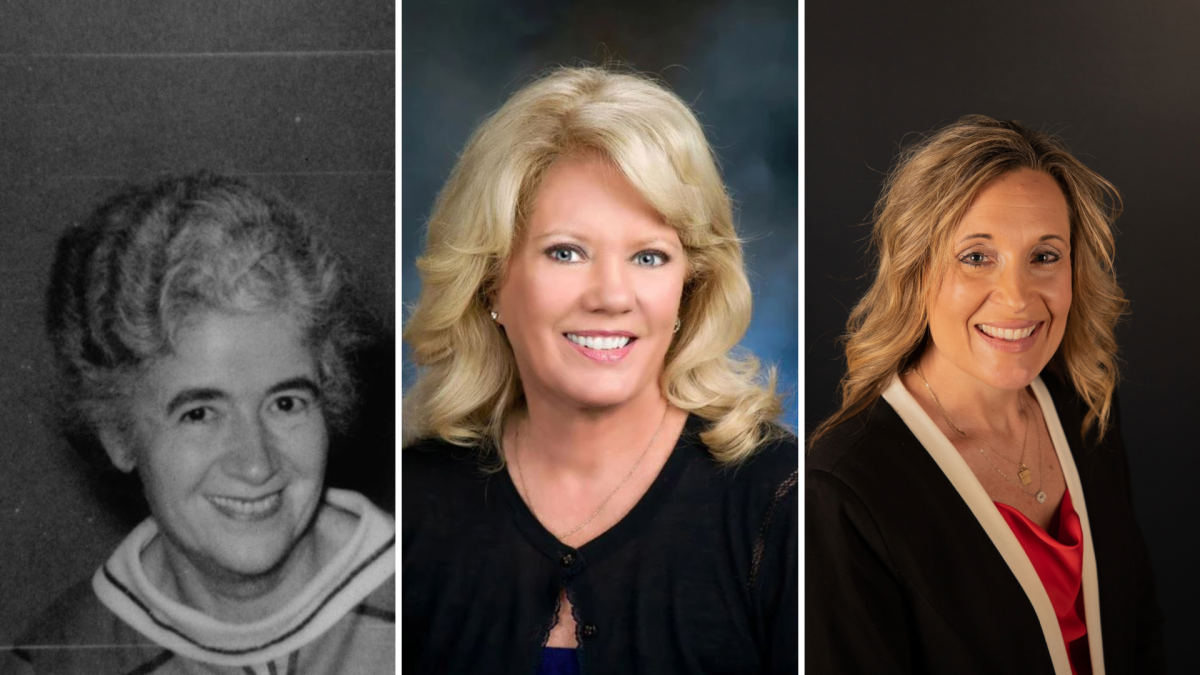
Together, all these women represent important chapters in Bentonville’s history. From classrooms and storefronts on the Square to public institutions and city government, their work helped shape the character and direction of the community across generations.
Long before women held the city’s highest office, they were already strengthening Bentonville through education, business, and civic service. Today, their legacy can still be seen in the institutions they helped build, the neighborhoods they helped guide, and the leadership roles women continue to hold in the city. Their stories remind us that Bentonville’s history has always been shaped not only by prominent figures, but also by the many individuals whose dedication and community spirit helped build the town we know today.